Cooking on a Himalayan Salt Block: A Beginner's Guide
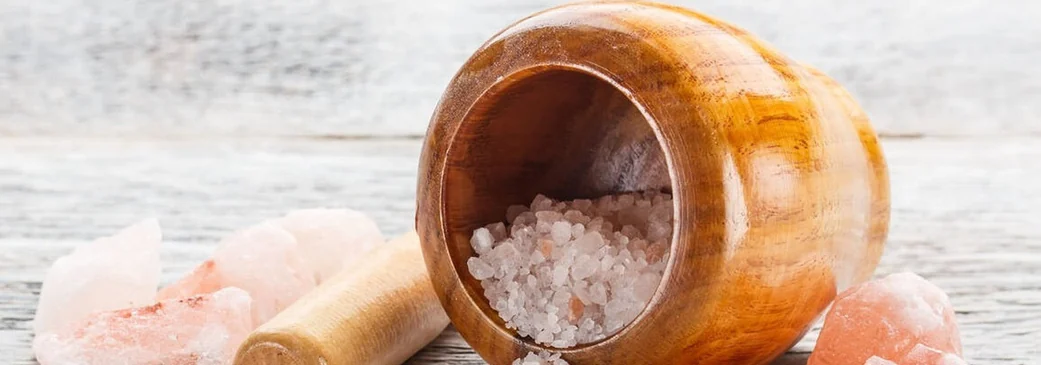
A Himalayan salt block is a solid slab of rock salt that can be heated to sear food or chilled to serve it. It seasons whatever touches it, holds heat well and looks striking on the table. It also behaves differently from a pan, so a few rules make the difference between a block that lasts for many meals and one that cracks the first time.
Choosing a block
- Thickness. For heating, choose a block at least 4 cm (about 1.5 inches) thick. Thinner tiles are fine for cold serving but are more likely to crack over heat.
- Size. A block of around 20 x 20 cm or 20 x 30 cm suits most home hobs, ovens and barbecues.
- Quality. Look for dense salt with few visible cracks or dark inclusions. Small natural lines are normal.
- Colour. Pink and light pink blocks cook the same way; choose whichever you prefer.
Before the first use
Wipe the block with a slightly damp cloth and let it dry completely, ideally for 24 hours. Any trapped moisture expands as steam when heated, which is a common cause of cracking.
The first heating is the most stressful for a block. It is normal for the colour to lighten and for fine fissures to appear. These usually do not affect cooking.
Heating it safely
The golden rule is to heat slowly. Rapid temperature changes cause cracking.
On a gas hob or barbecue
- Place the cold, dry block on the burner or grill.
- Heat on low for about 15 minutes.
- Turn to medium for another 15 minutes.
- Turn to high for a further 15 minutes or so, until it reaches cooking temperature.
On an electric coil hob, raise the block slightly with a metal ring or spacer so it is not sitting directly on the element. Induction hobs will not heat salt, and many manufacturers advise against using blocks on glass-ceramic tops.
In the oven
Put the block in a cold oven, then set the temperature and let it heat up with the oven. Never put a cold block into a preheated oven.
Is it hot enough?
An infrared thermometer is the easiest way to check. Around 200–250°C suits most searing. Without one, flick a few drops of water on the surface: they should sizzle and evaporate almost instantly.
What to cook
Salt blocks suit food that cooks quickly. The longer food sits on the block, and the wetter it is, the saltier it becomes.
- Thinly sliced beef, lamb or chicken
- Prawns, scallops and thin fish fillets
- Sliced vegetables such as courgette, peppers, mushrooms and asparagus
- Eggs and halloumi
- Fruit such as pineapple or peaches, for a sweet and salty finish
Cooking tips
- Pat food dry and oil the food, not the block.
- Do not add salt before cooking; the block will season it.
- Cut food thinly so it cooks before it absorbs too much salt.
- Avoid very wet marinades and sauces, which dissolve the surface and oversalt the food.
- Use heat-resistant gloves; the block stays very hot for a long time.
Serving cold
A chilled block makes an excellent serving platter. Cool it in the fridge for a couple of hours, or briefly in the freezer, then use it for sushi and sashimi, carpaccio, cheese, cured meats, butter, fruit or even ice cream. The food takes on a gentle saltiness at the edges.
A block used for serving cold can later be used for cooking, but avoid moving it straight from the freezer to the heat.
Cooling down
Let the block cool completely where it is, or on a heatproof trivet. This can take several hours. Never pour water on a hot block or put it on a cold surface to speed things up.
Cleaning and storing
- Once cool, scrape off any stuck food with a spatula.
- Wipe with a damp cloth or soft brush, using as little water as possible.
- Do not use soap or detergent, do not soak it and never put it in the dishwasher.
- Pat dry, then leave it to air-dry fully.
- Store it in a dry place, away from steam and humidity. Wrapping it in a cloth or paper helps.
Each clean removes a thin layer of salt, so the block slowly gets thinner. That is normal. Treat it like any other food-contact surface and clean it promptly after use.
Safety notes
- A heated block is heavy and very hot. Keep children and pets away while it cools.
- Use a stable, heatproof surface or a metal holder when serving at the table.
- If a block develops a deep crack right through, stop heating it. Pieces can break away under heat.
- Food cooked on salt absorbs some sodium. Anyone on a low-salt diet should keep that in mind.
Salt slabs from Globify
Globify cuts Himalayan salt cooking slabs and tiles in a range of sizes and thicknesses, suitable for retail packs, restaurant supply or gift sets. Ask us about sizes, packaging and private label options for your market.
Tell us what you need and we’ll send a quotation within one business day.