Private Label Himalayan Salt: Packaging Options for Retailers and Importers
Himalayan salt is one of the easier products to launch under your own brand. The product itself is stable, widely recognised and suitable for many retail channels, from supermarkets and delis to gift shops, spas and online stores. The decisions that set your brand apart are mostly about packaging, labelling and consistency.
What you can put your brand on
- Edible salt in pink, light pink, white and black, from fine powder to coarse grinder granules and chunks
- Bath salts and soap bars for wellness and gift ranges
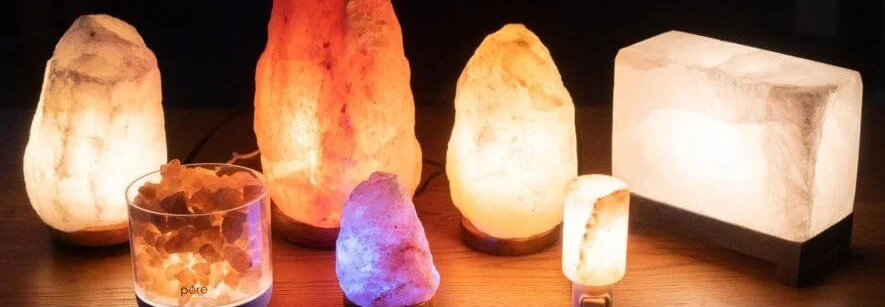
- Salt lamps, night lights, tea light holders and carved pieces
- Cooking slabs and serving tiles
Many brands start with two or three edible SKUs, such as fine pink salt in a pouch and coarse salt in a grinder, then add lamps or bath products once the first line is selling.
Packaging formats for edible salt
Printed stand-up pouches
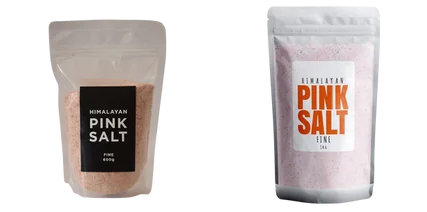
Stand-up pouches are the most popular retail format. They stand on the shelf, carry full-colour print on every face and can include a resealable zip, a tear notch, a hang hole and a clear window to show the salt. Laminated films provide a good moisture barrier, and matt or gloss finishes change the look considerably.
Kraft paper pouches
Kraft pouches suit natural, organic-style and artisan brands. They are usually lined on the inside to protect the salt from moisture, and often have a window and zip. Simple one- or two-colour print, or a printed label, works well on kraft.
Bottles, jars and grinders
Plastic or glass jars and bottles from around 200 g up to 1 kg suit shaker, spoon and refill use. Grinders take coarse granules and are a strong format for gifting and premium shelves. Choose the cap type, whether shaker, grinder or flip-top, to match the grain size.
Cotton bags
Printed cotton bags, from 1 kg up to 50 kg, give a premium, reusable feel at the smaller end and suit food service, refill shops and bulk resale at the larger end.
Bulk for repacking
If you pack locally, salt can be supplied in 25 kg bags or 1-tonne jumbo bags in your chosen grade.
Packaging for lamps and gifts
Salt lamps are heavy and fragile, so the box is protective as well as decorative. Branded lamp boxes can carry your logo, product photography, care instructions and electrical information. Master cartons should be strong enough for the weight and clearly marked with SKU, quantity and handling instructions.
Artwork and printing
- Start with the dieline. Ask your supplier for the exact template for each pack size before your designer begins.
- Digital printing suits shorter runs and many designs, with no printing plates or cylinders.
- Rotogravure printing suits longer runs. There is an upfront cylinder cost, but the unit price falls as volumes grow.
- Labels on plain packs are a low-commitment way to test a new market.
- Approve a proof. Colours vary between screens, materials and print methods, so sign off a printed proof or pre-production sample.
Minimum order quantities depend mainly on the packaging and print method rather than the salt. Ask for options at a few different volumes.
Labelling: get it right for your market
Food labelling rules are set by the country of sale, and the brand owner or importer is normally responsible for compliance. Typical requirements include:
- Product name and net quantity in the correct units
- Country of origin
- Name and address of the responsible food business, often the importer
- Lot or batch code
- Date marking, where required; some markets exempt salt, others expect it
- Barcodes registered to your own company
- The required language or languages
Be careful with wellness wording. Claims that salt detoxifies, cures or treats anything are restricted in many markets and are not supported by evidence.
For lamps and other electrical items, importers must ensure products meet local electrical requirements and plug types, such as CE or UKCA marking rules in Europe and the UK.
Protecting the product in transit
Salt does not spoil, but it does absorb moisture. Choose good barrier materials and sealed closures, and ask how cartons will be protected during sea freight. Plan carton counts and pallet patterns together, because salt is dense and a container usually reaches its weight limit before it is full.
A typical private label process
- Share your product list, pack sizes, target market and estimated volumes.
- Receive product samples and packaging options.
- Finalise artwork on the supplier's dielines.
- Approve proofs and pre-production samples.
- Production, packing and inspection, including third-party inspection if you require it.
- Shipment with the export documents agreed in advance.
Private label with Globify
Globify packs Himalayan salt under its customers' own brands, with printed stand-up pouches, kraft pouches, bottles and grinders from 200 g to 1 kg, cotton bags from 1 to 50 kg, branded lamp boxes and master cartons, plus custom carving. Tell us about your brand and market and ask for a private label quote.
Tell us what you need and we’ll send a quotation within one business day.