Himalayan Pink Salt vs Table Salt: What's Actually Different
Walk down any supermarket aisle and you will find salt in two very different guises: fine white table salt in a cardboard drum, and rosy pink crystals in a glass grinder at several times the price. Both season food, and both are mostly the same compound. The differences are real but narrower than marketing often suggests, so it helps to know exactly where they lie.
Where each salt comes from
Himalayan pink salt is rock salt mined from the Salt Range in Punjab, Pakistan, a line of hills south of the Himalayan foothills. The deposits formed when ancient seas evaporated hundreds of millions of years ago and were later buried and compressed. Khewra is the best-known mine, but salt is extracted at several sites across the range.
Table salt can come from underground rock salt, from brine pumped up from deep deposits, or from evaporated seawater. Whatever the source, it is usually dissolved, purified and recrystallised into small, uniform grains.
Composition: mostly the same thing
Both salts are overwhelmingly sodium chloride. Refined table salt is typically 99% or more sodium chloride before anything is added. Himalayan pink salt is roughly 96–99% sodium chloride, depending on the seam and the sample, with the rest made up of small amounts of other minerals such as calcium, magnesium, potassium and iron, plus traces of moisture and insoluble matter.
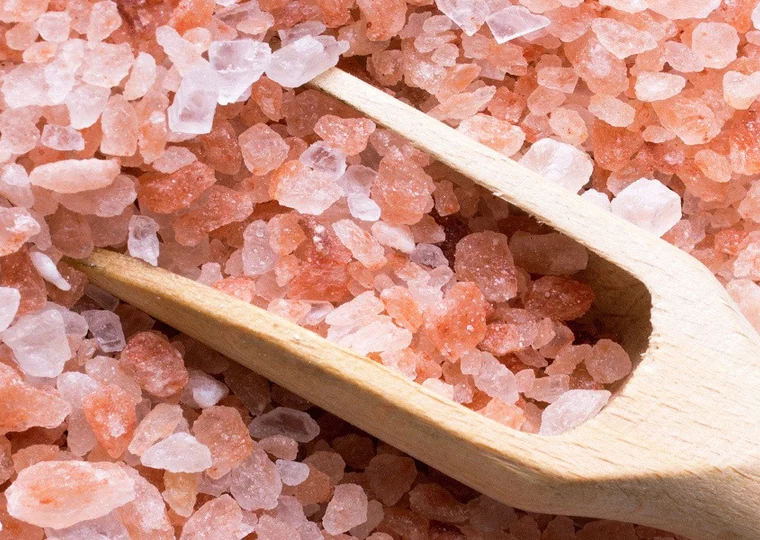
Those trace minerals give pink salt its colour. Iron oxide is the main reason for the pink to reddish tones; paler crystals simply contain less of it.
The trace minerals are genuine, but the quantities are small. You would need to eat far more salt than is healthy to get a meaningful share of your daily calcium, magnesium or potassium from it.
Pink salt is best thought of as a less processed, naturally coloured salt, not as a mineral supplement.
Iodine: the difference that matters most
Iodine is the one nutritional difference worth real attention. In many countries table salt is iodised, meaning a small amount of potassium iodide or iodate is added. Salt iodisation has been one of the most effective public health measures against iodine deficiency, which can affect thyroid function and children's development.
Himalayan pink salt is usually not iodised, and its natural iodine content is negligible. If you switch entirely to pink salt at home, make sure you get iodine elsewhere. Dairy, eggs, fish and seafood are common sources, or you can simply keep an iodised salt in the cupboard as well. Anyone who is pregnant, breastfeeding or managing a thyroid condition should ask a doctor or dietitian for advice.
Additives
Table salt often contains an anti-caking agent so that it pours freely in humid conditions. Common examples include calcium silicate, magnesium carbonate and sodium or potassium ferrocyanide, depending on the country and brand. These are approved food additives used in very small quantities.
Natural Himalayan salt is generally sold without additives: the rock is crushed, ground and sieved to size, and that is all. Because there is no anti-caking agent, very fine pink salt can clump in a damp kitchen. A few grains of rice in the shaker, or a grinder filled with coarser crystals, solves the problem.
Sodium per spoonful
Gram for gram, pink salt and table salt contain almost the same amount of sodium. The difference people sometimes notice comes from crystal size. A teaspoon of coarse pink crystals weighs less than a teaspoon of densely packed fine table salt, because there is more air between the grains.
That can mean slightly less sodium per pinch, but it is not a health advantage in itself. If you are cutting down on salt, the total amount you eat is what counts, whichever kind it is.
Taste, texture and colour
This is where pink salt genuinely earns its place. Many cooks describe it as tasting slightly milder or rounder than table salt, although taste is personal and much of the effect comes from texture. The practical differences are clear enough:
- Texture. Coarse pink salt gives a pleasant crunch as a finishing salt on steak, salads, roasted vegetables and even chocolate.
- Appearance. The colour adds interest to finished dishes, the rims of glasses and gift sets.
- Grind options. It is available in everything from fine powder to granules for grinders and large chunks.
- Dissolving speed. Fine table salt dissolves quickly and measures consistently, which suits precise baking. Fine-ground pink salt works too, but coarse grades do not.
Light pink, white and black varieties
Not all Salt Range salt is deep pink. The same deposits contain light pink and near-white seams, which suit products where a paler look is preferred. Himalayan black salt, known in South Asia as kala namak, is a different product again. It is rock salt heated with charcoal or plant material, which creates sulphur compounds responsible for its distinctive eggy aroma. It is popular in chaat, chutneys, raita and vegan cooking.
Claims to treat with caution
Pink salt is often sold with claims that it detoxifies the body, balances pH, improves sleep or contains "84 minerals". There is no good scientific evidence for the health claims, and long mineral lists count elements present only in trace or barely detectable amounts. Pink salt is a pleasant, natural, minimally processed salt. It is still salt, and the usual advice to keep overall intake moderate applies.
Which should you use?
- Use iodised salt if it is your household's main source of iodine.
- Use fine table salt where fast, even dissolving matters, such as precise baking.
- Use Himalayan pink salt for finishing, grinders, presentation and anywhere you prefer an unrefined, additive-free product.
Many kitchens keep both, and that is a perfectly sensible approach.
Sourcing Himalayan salt in bulk
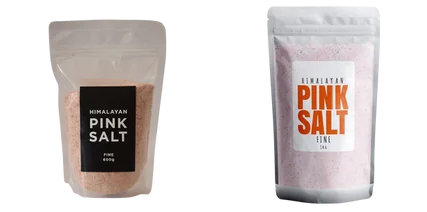
Globify supplies Himalayan pink, light pink, white and black salt from the Salt Range in every grade from fine powder to chunks, in retail packs from 500 g up to 1-tonne jumbo bags. Request a quote for bulk edible salt, or ask about packing it under your own brand.
Tell us what you need and we’ll send a quotation within one business day.